

DF54 vs Baratza Encore ESP: Which Grinder Fits Your First Setup?
The DF54 and the Baratza Encore ESP run about $30 apart in price, but they are built for different routines. The DF54 is a 54mm flat-burr single-dose grinder with stepless adjustment, priced around $220–$230. The Encore ESP is a 40mm conical-burr grinder with 40 numbered settings (20 for espresso, 20 for filter), priced around $200. If you brew espresso only, on one machine, and want to fine-tune the grind in small increments, the DF54 fits. If you want one grinder that also handles pour-over, with a bean hopper you can leave loaded, the Encore ESP fits better.
Key takeaways
| Spec | DF54 | Baratza Encore ESP |
|---|---|---|
| Burrs | 54mm flat, stainless steel | 40mm conical, stainless steel (Baratza M2) |
| Adjustment | Stepless, roughly 90 marked reference positions | 40 stepped clicks — 20 espresso, 20 filter |
| Motor | 150W AC motor | 70W DC motor, 550 RPM burr speed |
| Grind speed | Not published by the maker | 1.3–2.2 g/sec across settings #10–#30 |
| Bean handling | Single dose only; 50g bellows-style hopper | 10.6 oz (300g) bean hopper + 4.2 oz (120g) grounds bin |
| Typical price | About $220–$230 | About $200 |
| Warranty | Varies by seller; commonly 1–2 years | 1 year, parts and labor, direct from Baratza |
| Best for | Espresso-only, one bean at a time, frequent coffee changes | Espresso plus filter, hands-off hopper feeding |
Burrs and adjustment: continuous dial vs. numbered clicks
The DF54 uses 54mm flat burrs and a stepless collar. Turn it a hair, and the grind moves with it. There is no click to count, no setting to name — just roughly 90 marked lines on the collar that work as reference points, not true numbered settings.
The Encore ESP uses 40mm conical burrs, Baratza’s own M2 design, across 40 stepped clicks. Twenty of those settings sit in the espresso range, twenty in the filter range. Each click is a defined, repeatable position. Write down “14” and you can return to exactly 14 next week.
Burr size and shape do not settle which grinder tastes better on their own. A 54mm flat burr and a 40mm conical burr process beans differently — flat burrs tend toward a more uniform particle size at a given setting, conical burrs toward a wider distribution with more fines. That difference shows up as a texture and extraction difference in the cup, not a verdict on which is “correct.” Our buyer’s guide to choosing an espresso grinder breaks down how burr geometry interacts with basket size and dose.
Dialing in espresso: fine steps vs. defined clicks
With the DF54’s stepless collar, a shot running 3 seconds fast gets a tiny nudge finer — no full click, just a few degrees of turn. Log the collar position next to your dose, yield, and shot time, because there’s no numbered setting to fall back on later.
With the Encore ESP, move one click at a time within its 20 espresso positions, then pull a shot before touching dose or yield. Twenty clicks across the espresso range gives you real resolution, but each adjustment still jumps between fixed points rather than sliding continuously.
Neither grinder removes the need for a repeatable process. Our three-shot dial-in framework changes one variable at a time — grind, then dose, then yield — so you can tell which adjustment actually fixed the shot.
Filter coffee: the Encore ESP’s second range, and the DF54’s absence of one
The Encore ESP’s other 20 settings cover filter brewing — pour-over, batch brew, AeroPress. That range is why Baratza markets it to a household making both espresso and drip coffee from one grinder.
The DF54 has no dedicated filter range. Its stepless collar can reach coarser settings, but the grinder, hopper, and 58mm dosing cup are built around espresso dosing, not a pour-over workflow. If you regularly brew V60 or Chemex alongside espresso, that’s a real gap, not a minor inconvenience.
Single dosing vs. a loaded hopper: the daily routine
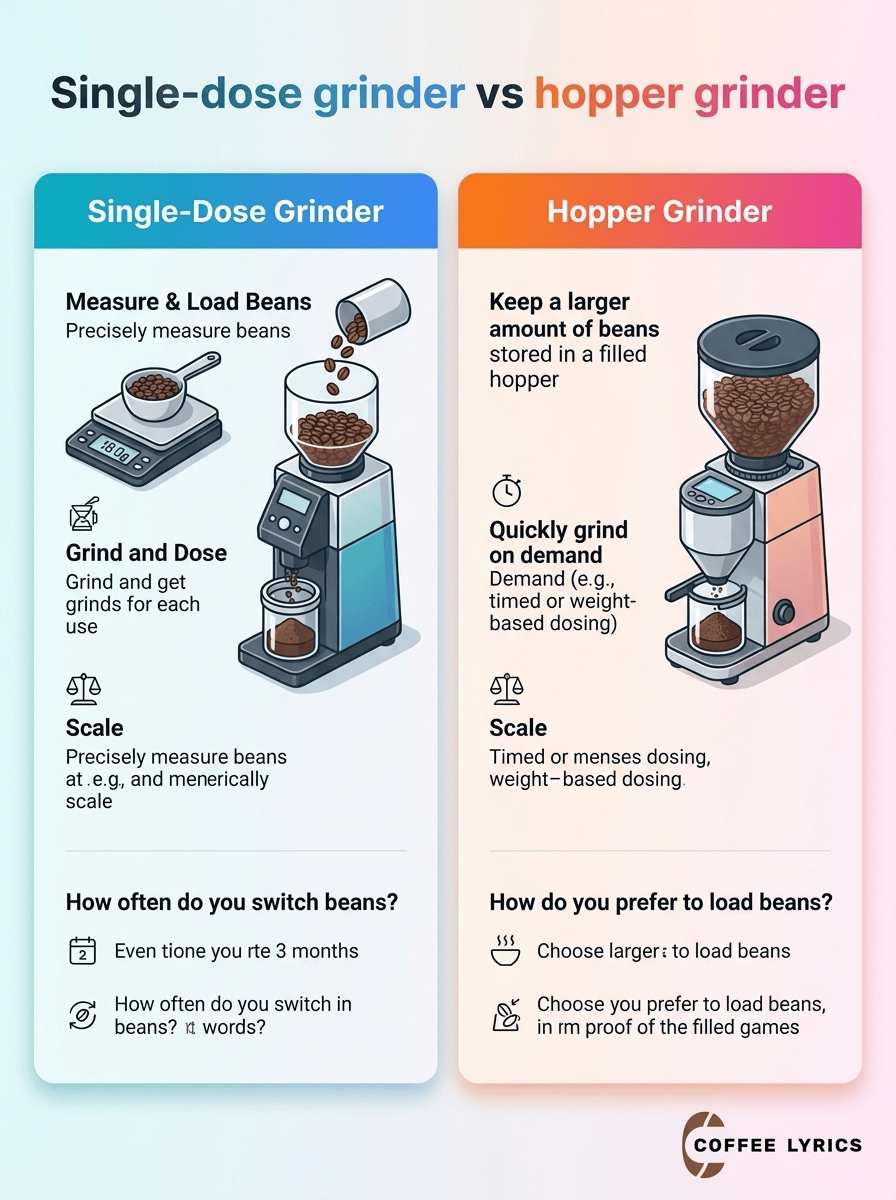
The DF54 is single-dose only. Weigh 18g, drop it in the bellows hopper, grind, repeat. There’s no bean storage inside the grinder, which matters if you rotate between two or three bags a week.
The Encore ESP holds 300g of beans in its hopper and catches grounds in a 120g bin below the burrs. Load it once, pull doses for days. That convenience comes with retention and freshness trade-offs that any hopper grinder carries. We cover the full trade-off, including how to measure your own retention, in single dose grinder vs. hopper grinder.
Retention, static, and the mess around the burrs
The DF54 ships with an anti-popcorning disc that keeps the last few beans from bouncing out of the chamber before they’re ground, plus a static-reducing ionizer built into the grounds chute. Reviewers report it brings static and clumping down close to zero, though “close to zero” is still not zero — weigh your own input and output to know your actual number.
The Encore ESP’s hopper-fed design means retention shows up differently: grounds can sit in the chute between the burrs and the 120g bin, and a bean change doesn’t fully clear what’s already in the path. If you switch between regular and decaf, grind a small amount and discard it first. Our DF64 retention fix guide walks through the weigh-in, weigh-out test that applies to any grinder, not just DF models.
Price, warranty, and long-term ownership
At roughly $220–$230, the DF54 costs more than the Encore ESP’s roughly $200 list price for a narrower job — espresso, single dose, one bean at a time. Baratza backs the Encore ESP with a straightforward 1-year parts-and-labor warranty handled directly by the company, and the brand has a long track record of selling replacement burrs and parts for grinders years after purchase. DF54 warranty terms vary more by seller and region — some run 1 year, others extend to 2 — so confirm the exact terms with whoever you buy from before you factor it into the decision.
Replacement burrs exist for both: 54mm flat burr sets for the DF54, and Baratza’s own 40mm conical replacement burrs for the Encore ESP. Burr life for home use on either model typically runs 500–1,000 pounds of coffee before a noticeable dulling — track roughly how much coffee has gone through yours rather than guessing by calendar time.

Which grinder fits your first setup?
- Choose the DF54 if you brew espresso only, want stepless fine control, and rotate between different beans often enough that single dosing fits your routine anyway.
- Choose the Encore ESP if you want one grinder for both espresso and filter coffee, prefer loading beans once and forgetting about it, and want numbered settings you can log without writing down a collar position.
- If budget is the deciding factor, the Encore ESP’s roughly $200 price undercuts the DF54 by about $20–$30 while adding a filter range the DF54 doesn’t have.
- If espresso precision is the deciding factor, the DF54’s stepless adjustment gives you finer control than 20 fixed espresso clicks, at the cost of no filter range and no onboard bean storage.

DF54 vs Baratza Encore ESP — burrs, adjustment, and workflow compared at a glance.
Frequently asked questions
Can the DF54 grind coarse enough for pour-over or French press?
Its stepless collar reaches coarser settings, but the grinder isn’t built around a filter workflow the way the Encore ESP is — there’s no separate filter range, and the single-dose hopper is sized for espresso-sized doses, not a larger French press dose.
Is 40 settings enough resolution for espresso on the Encore ESP?
Twenty of the 40 total settings sit in the espresso range, which is more resolution than many stepped grinders in this price bracket. It’s still coarser-grained than the DF54’s stepless adjustment, but most home shots can be corrected within one or two clicks.
Do I need a separate scale for either grinder?
Yes. Neither grinder doses by weight on its own — the DF54’s 50g hopper and the Encore ESP’s timed or manual dosing both need a scale to turn “a dose” into a repeatable number. See our guide on espresso scale accuracy for what resolution actually matters at the dose sizes these grinders handle.
Can I use the Encore ESP’s bean hopper for single dosing instead?
You can run a small, weighed amount through it instead of leaving the hopper full, but the hopper and burr set aren’t designed around empty-hopper feeding the way the DF54’s bellows system is. Expect less consistent feeding at a near-empty hopper than with a dedicated single-dose grinder.
How often should I replace the burrs on either grinder?
As a rough home-use benchmark, flat and conical burrs both tend to hold their edge for 500–1,000 pounds of coffee before grind quality noticeably declines. A household grinding 1 pound a week would see that at roughly 10–20 years, so most home users replace a grinder before they wear out a burr set.
Which grinder is louder?
Neither maker publishes a decibel rating, so treat in-store or video comparisons as rough guidance rather than a spec. In general, a higher-wattage AC motor like the DF54’s 150W unit tends to run louder than a lower-wattage DC motor like the Encore ESP’s 70W unit, though burr size and bean density also affect perceived noise.
Bottom line
The DF54 and the Encore ESP solve different problems at a similar price. The DF54 wins on espresso adjustment precision and single-dose control; the Encore ESP wins on versatility, hopper convenience, and a warranty you deal with directly from the manufacturer. Match the grinder to your actual routine — not the burr label — and you’ll be happier with either one six months in.
For background on how particle size and extraction interact beyond any single grinder’s marketing numbers, the Specialty Coffee Association’s brewing research is a useful starting point.