

Precision is essential when it comes to espresso, and nowhere does that precision matter more than at the grinder. Learning how to choose the right grinder for espresso is the single upgrade that separates a watery, sour shot from a cafe-quality pull you’d be proud to serve.
We’ve spent years testing gear in our own home coffee setup, and if there’s one lesson worth repeating, it’s this: your espresso machine gets the glory, but the grinder does the actual work. Get the grind wrong, and no amount of pressure, PID control, or fancy portafilter is going to save your cup.
Key Takeaways
- Burrs, not blades: Espresso demands burr grinders because they produce a consistent particle size, which is non-negotiable for proper extraction.
- Grind size is measured in microns: Espresso typically needs grounds between 200 and 400 microns, far finer than pour-over or French press.
- Manual grinders can absolutely pull espresso: Several manual coffee grinders under $100 have burrs precise enough for espresso, no electricity required.
- Motor and burr size matter for volume: Electric grinders with larger, stepless burrs give you more control if you’re brewing multiple shots a day.
- Your grinder should match your coffee machine’s ambition: A $3,500 dual boiler paired with a mediocre grinder is like a race car running on regular gas.
- Dose consistency beats fancy features: A grinder that delivers the same dose, shot after shot, will outperform one with more buttons but less repeatability.
- Maintenance is part of the purchase decision: Grinders with removable burrs and accessible chambers stay accurate for years; sealed units don’t.
Why the Grinder Is the Heart of Your Espresso Setup
We say this often, and we’ll say it again: the grinder is the heart of your coffee flavor, not the machine sitting next to it.
Espresso is unforgiving. You’re forcing hot water through a compact puck of grounds in under 30 seconds, which means every variable, from grind size to distribution, gets amplified in the cup.
If you buy only one piece of quality gear for espresso, make it a burr coffee grinder. A blade grinder chops beans unevenly, producing a mix of dust and boulders that extracts at wildly different rates, some of it bitter and burnt, some of it sour and underdeveloped.
A burr grinder, by contrast, crushes beans between two abrasive surfaces set at a fixed distance, producing particles of a uniform size. That consistency is what turns brewing from a guessing game into a science.
How to Choose the Right Grinder for Espresso: Burrs, Conical vs. Flat
Once you’ve committed to a burr grinder, the next decision is burr geometry. This is where a lot of home baristas get stuck, so let’s break it down.
- Conical burrs: Cone-shaped and typically quieter, they run cooler at lower speeds and tend to produce a slightly wider particle distribution. Great for those who want flexibility across brew methods, not just espresso.
- Flat burrs: Two parallel rings that produce a narrower, more consistent particle size. Most dedicated espresso grinders use flat burrs because that tight distribution translates directly into cleaner, more balanced shots — a relationship documented in the Specialty Coffee Association’s brewing research.
Neither is objectively “better” for every situation, but if espresso is your primary brew method, flat burrs generally give you the edge in consistency. This is the same principle we cover in our coffee grind size guides: consistency at the particle level is the input that determines your extraction output.
Grind Size and Micron Precision for Espresso
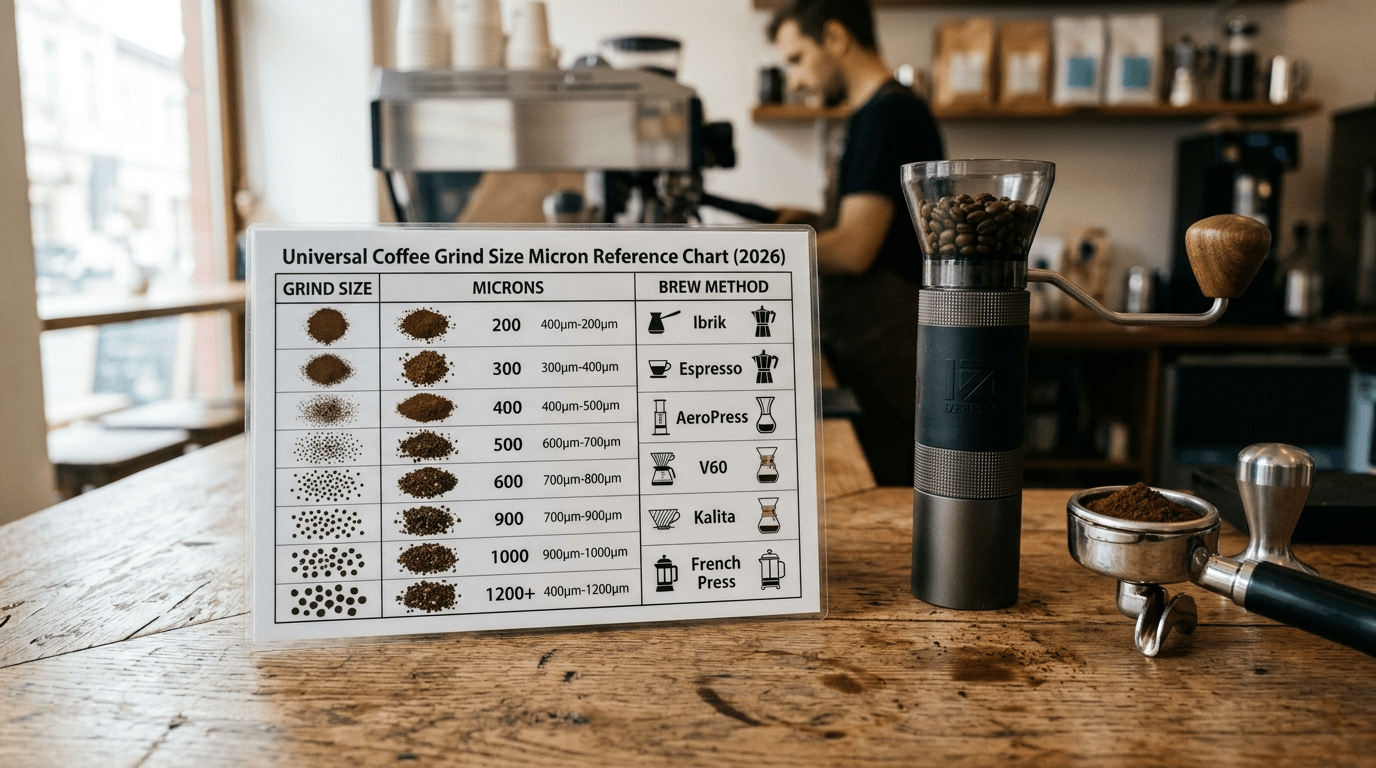
Grind size is where the science of extraction gets real, and it’s measured in microns, not vague terms like “fine” or “medium.”
Espresso generally calls for grounds between 200 and 400 microns, a fraction of what you’d use for pour-over (around 600 to 800 microns) or French press (750 to 1,000 microns). See our universal grind size micron reference chart for the full breakdown across every brew method. That narrow window is exactly why grind adjustment matters so much when you’re figuring out how to choose the right grinder for espresso.
Look for grinders that offer stepless adjustment, or at minimum, dozens of micro-steps within the espresso range. A grinder that only offers five settings total isn’t giving you the resolution you need to dial in a shot when your beans, roast date, or humidity change day to day.
Coffee’s greatest enemies are air, light, heat, and moisture, and grind size sits right in the middle of how fast those enemies do their damage. The finer the grind, the more surface area is exposed, which means espresso grounds go stale faster than any other brew method.
Manual vs. Electric: How to Choose the Right Grinder for Espresso on a Budget
Here’s a question we get constantly: do you really need an expensive electric grinder to pull good espresso? The honest answer is no, not always.
Manual grinders often outperform electric counterparts in the same price bracket. Here’s why: higher-quality burrs for the price, better cost-effectiveness, and grind consistency that rivals machines costing three times as much.
Many high-precision manual grinders, often priced under $100, are capable of producing a fine, consistent grind suitable for espresso. The trade-off is effort and time; you’re providing the motor, and a proper espresso grind on a hand crank can take a minute or two of steady cranking.
For those of us who spend hours coding or in back-to-back meetings, that minute of cranking is itself a small ritual, a moment of calm between commits.
Best Manual Coffee Grinders Under $100 for Espresso
We’ve tested several budget manual grinders capable of espresso-grade fineness. Here’s how they stack up.
| Grinder | Price | Burr Type | Espresso-Ready? |
|---|---|---|---|
| JavaPresse Manual Coffee Grinder | $99 | Conical ceramic | Yes, with patience on setting |
| Hario Ceramic Coffee Mill-Original | $99 | Conical ceramic | Yes, fine setting reaches espresso range |
| IMAVO Manual Coffee Grinder | $99 | Stainless steel conical | Yes, adjustable dial |


These budget picks won’t have all the bells and whistles of a commercial-grade unit, but they prove a point we make often: you don’t need to buy everything at once to get a real espresso shot at home.
Motor Power, Dose Control, and Consistency
If you’re leaning electric, motor power and dose control become the deciding factors.
A weak motor will slow down, generate excess heat, and unevenly grind through dense beans, especially at fine espresso settings. Look for grinders with at least 150 watts of dedicated power, and ideally a low RPM design that keeps friction (and heat) to a minimum.
Dose control is the unsung hero of grinder shopping. Grinders with built-in timers or gram-level accuracy let you repeat the same dose shot after shot, which is the whole point of a good coffee scale philosophy applied to solids instead of liquid.
Consistency is the secret that connects every step in this process. A grinder that gives you 18.0 grams one time and 18.4 grams the next is introducing a variable you don’t need, especially once you’ve already dialed in your grind size.
Coffee Machines and Grinders: Matching Your Setup
Your grinder choice shouldn’t happen in isolation from your coffee machines decision. The two need to work together.
If you’re running an entry-level espresso machine, a mid-range electric grinder or a sharp manual grinder will likely outperform your machine’s ceiling. But if you’re stepping up to something like a Breville Dual Boiler ($1,499) or a La Marzocco Linea Mini ($3,500) — see our picks for the best double boiler espresso machines — pairing it with a weak grinder is a waste of that machine’s temperature stability and pressure precision.
Think of it like software: your espresso machine is the runtime, but your grinder is the compiler. Feed it bad input (inconsistent grounds), and no amount of processing power downstream fixes the output.

A visual guide to selecting the right espresso grinder by weighing five essential factors. Learn how burrs, grind quality, motor power, dose, and price influence performance.
Building an Espresso-Ready Home Coffee Corner
Why you deserve a coffee corner at home is a question we’ve answered before, and the grinder is always the centerpiece of that setup.
A dedicated corner with your grinder, scale, and machine within arm’s reach turns the daily grind (pun intended) into an actual ritual instead of a rushed chore before a meeting. If you’re starting from scratch, our home coffee setup guide walks through the full gear list beyond just the grinder.
Maintaining Your Grinder for Consistent Extraction
Choosing the right grinder for espresso is only half the job. Keeping it accurate over time is the other half, and it’s the part most people skip.
- Clean the burrs monthly: Coffee oils build up on burrs and dull their cutting edge, especially with darker roasts used in espresso.
- Purge retained grounds: Stale grounds sitting in the chamber from your last grind will contaminate your fresh dose and throw off your ratio.
- Check burr alignment periodically: Misaligned burrs create uneven particle size even if your setting hasn’t changed.
- Store beans properly: Coffee’s greatest enemies (air, light, heat, and moisture) attack beans just as fast as ground coffee, so keep your hopper covered and your bean supply in an airtight container.
A grinder with removable burrs and an accessible chamber makes this maintenance routine painless. A sealed, non-serviceable unit might look sleek, but it will drift out of calibration and you won’t be able to fix it.
Conclusion
Learning how to choose the right grinder for espresso comes down to a few clear priorities: real burrs over blades, micron-level grind precision, a motor or manual mechanism that delivers consistency, and a dose you can repeat every single time.
You don’t need to spend a fortune to get there. Whether you go with a $99 manual grinder or invest in an electric model that matches a serious coffee machines setup, the goal is the same: turning brewing from a guessing game into a repeatable, cafe-quality ritual you can count on every morning.
Frequently Asked Questions
What is the most important factor in choosing an espresso grinder?
Burr quality and grind consistency matter more than any other spec. A grinder that produces uniform particles in the 200 to 400 micron range will outperform a grinder with more features but inconsistent output.
Can a manual grinder really work for espresso?
Yes, many manual grinders under $100 have burrs precise enough to hit espresso-fine settings. The trade-off is time and physical effort, since you’re supplying the grinding power by hand instead of a motor.
Are conical or flat burrs better for espresso in 2026?
Flat burrs generally produce a narrower, more consistent particle distribution, which is why most dedicated espresso grinders use them. Conical burrs still work well, especially if you brew multiple methods beyond just espresso.
How fine should coffee be ground for espresso?
Espresso grounds typically fall between 200 and 400 microns, noticeably finer than pour-over or drip coffee. The exact setting depends on your specific beans, roast level, and machine, so expect to dial it in over your first few shots.
Is it worth buying an expensive electric grinder over a manual one?
If you’re brewing several shots a day or entertaining guests, an electric grinder with strong dose control and a powerful motor saves real time. For occasional home brewing, a quality manual grinder under $100 can deliver nearly the same extraction quality.
Do I need to match my grinder to my espresso machine’s price point?
Not exactly, but it helps. A high-end machine like a double boiler unit deserves a grinder with tight consistency so you’re not wasting the machine’s precise temperature control on unevenly ground coffee.
How often should I clean my espresso grinder?
Aim for a burr cleaning once a month if you grind daily, plus a quick purge of retained grounds before each dose. Regular maintenance keeps your grind size accurate and prevents stale coffee oils from affecting flavor.
3 thoughts on “How to Choose the Right Grinder for Espresso: A Precision Buyer’s Guide”
Comments are closed.