

Honey Process Coffee: How It’s Made, What the Colors Mean, and How It Tastes
Honey process coffee gets its name from the sticky mucilage left on the bean during drying, not from actual honey. Understanding how much mucilage stays on, and how producers manage drying, gives you a better way to judge the label and the coffee in your cup.
Key Takeaways
- What is honey processing coffee? Producers remove the cherry skin and most of the fruit, then dry the parchment-covered beans with some mucilage still attached.
- What do the color labels mean? White, yellow, red, and black usually describe increasing amounts of mucilage left on during drying, but the terms vary by producer.
- Does honey processing guarantee a sweeter cup? No. Honey coffees often taste sweeter and less acidic than washed coffees, but variety, altitude, drying, roast, and brewing also shape flavor.
- How should you assess the coffee? Taste it alongside other coffees using the same brewing recipe, and note sweetness, acidity, body, clarity, and any unwanted fermented or musty character.
- How does processing fit into coffee? Processing is one part of the wider journey from growing coffee to brewing it — our specialty coffee guide covers the rest of that path.
- What should you change for a V60? Start with your familiar recipe. If the cup tastes bitter or heavy, try slightly cooler water or a touch coarser grind, changing one variable at a time.
What honey processing does to the coffee cherry
Honey processing is a method of preparing coffee after harvest. Producers depulp ripe coffee cherries, removing the skin and most of the fruit, but leave some sugar-rich mucilage attached to the parchment surrounding each bean.
That mucilage feels sticky, which explains the name. Producers do not add honey to the coffee, and the process does not depend on honey as an ingredient.
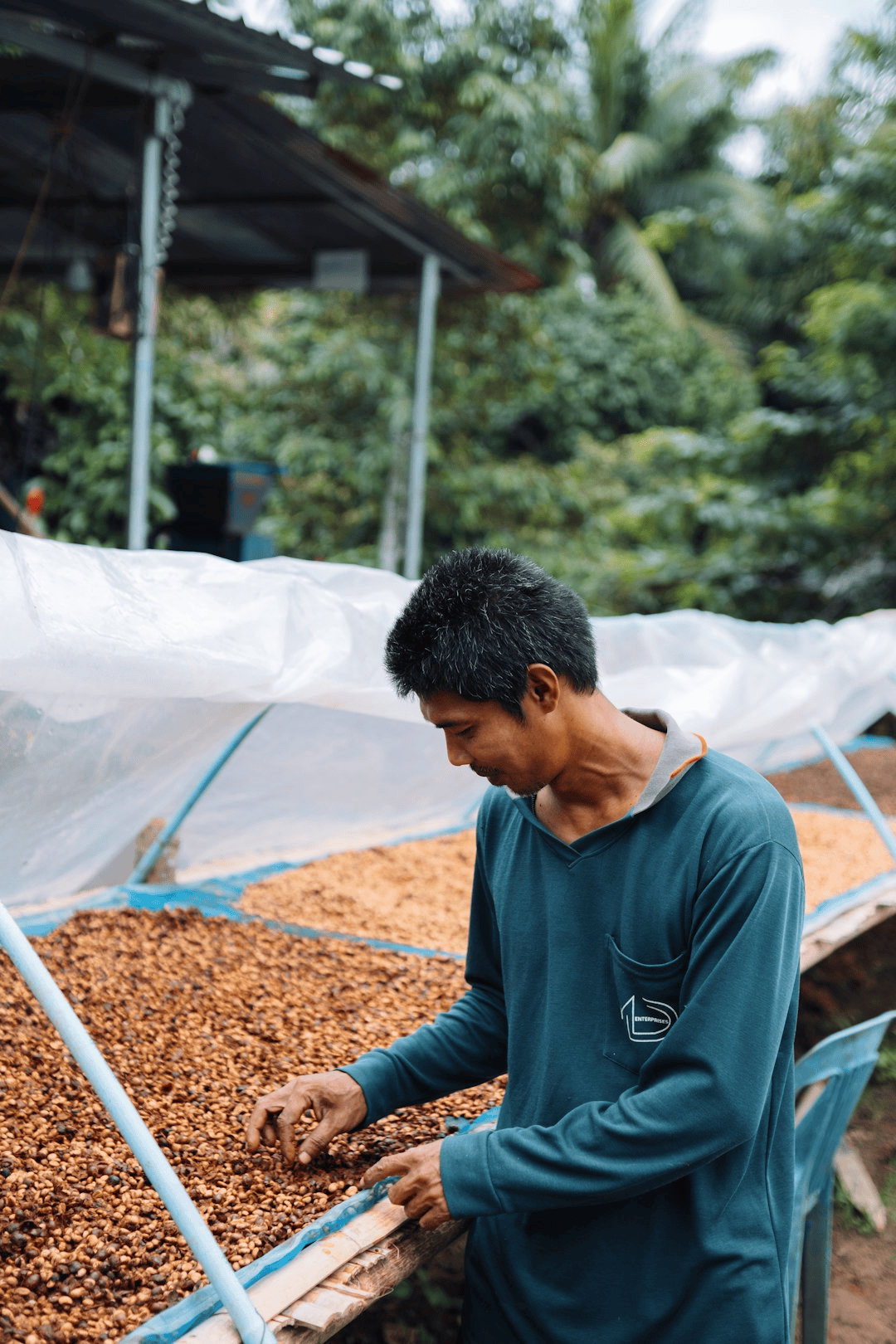
The parchment coffee dries with some mucilage still attached. Once it is dry, producers hull it to remove the parchment, then mill and sort the green coffee.
These steps matter: depulping removes the cherry’s outer skin, drying reduces moisture, and hulling removes the parchment. They are distinct from the fermentation and washing used to remove mucilage in washed processing.
Mucilage affects fermentation and drying, and those conditions can influence the cup. But sweetness is not simply fruit sugar moving from the mucilage into the bean; origin, variety, roasting, and brewing also shape what you taste. For a broader look at how origin and grading shape quality before processing ever comes into it, see our complete guide to specialty coffee.
What white, yellow, red, and black honey labels describe
The color terms usually describe how much mucilage remains on the parchment during drying. White honey generally leaves the least, followed by yellow honey, red honey, and black honey, which generally leaves the most.
Those labels are descriptive, not a universal grading system with one fixed recipe behind each color. Producers may use the terms differently, and the amount of mucilage is only one part of their drying method.
More mucilage usually means a slower, more demanding drying process. The coffee may need closer management of airflow, turning, and exposure to moisture so that the beans dry evenly rather than developing wet patches.
Long or uneven drying can increase the risk of unwanted fermentation, mold, or other defects. That does not make black honey coffee automatically better, more intense, or sweeter than white honey coffee; it means the producer has managed a different drying challenge.
So treat color as a clue about how the producer approached drying, not as a flavor scale or a ready-made brewing recipe. Local conditions and the producer’s own terminology affect what a yellow, red, or black label means in practice.
How honey differs from washed and natural coffee
Washed coffee has its mucilage removed through fermentation and washing before the beans dry. Honey coffee dries with some mucilage still attached to the parchment, while natural coffee dries inside the whole cherry before the fruit is removed.
Honey processing is mechanically closer to pulped natural than to natural processing because producers depulp the cherry first. Names and practices can overlap across producing regions, so comparing the actual steps is more useful than relying on a label alone.
Honey processing often uses less process water than fully washed processing because producers do not wash away all the mucilage. But lower water use does not by itself make a method more sustainable: drying space, labor, weather, and the resources needed to control fermentation all affect what a producer can manage responsibly.
Washed, natural, and honey methods are different ways of processing coffee before it is brewed. A honey-processed lot, a washed lot, and a natural lot from the same farm can still taste more alike than two honey lots from different producers — which is the real argument for tasting past the label.
Why drying control and local conditions matter
Mucilage makes consistency during drying especially important. Producers turn the coffee and manage airflow and moisture exposure to limit wet patches, which can dry unevenly and encourage unwanted fermentation.
When fermentation or drying is poorly controlled, the result can include musty, sour, or otherwise defective notes. Producers manage those risks with careful sorting, clean drying surfaces, and regular monitoring as the coffee dries.
The practical setup depends on local conditions. Climate, drying-bed design, available labor, and infrastructure all influence which process a producer can carry out reliably, alongside the flavor profile they hope to develop.
Producers in the same region can use different fermentation and drying practices, so two coffees with the same broad process label may behave differently. The Specialty Coffee Association covers post-harvest processing in more depth if you want to go further than a single label.
What honey-process coffee tastes like, and what it doesn’t guarantee
Honey-processed coffees often give a sweeter impression and lower perceived acidity than washed coffees. Those are tendencies, not promises: roast level, origin, variety, and brewing can shift the balance in either direction.
Altitude and varietal matter at least as much as the color label when you are trying to understand a coffee’s potential flavor. Consistent drying matters too, because it gives the lot a better chance to express that potential without uneven fermentation getting in the way.
Even cups from the same lot can taste inconsistent when drying or fermentation was uneven. Taste more than one cup before deciding that an unusual flavor defines the whole coffee or the process.
Do not treat a honey label as a guarantee of fruit, caramel, or honey-like notes. Instead, assess the cup directly: Is the sweetness clear or heavy? Does the acidity feel balanced? Is the body pleasant, and does the finish stay clean?
Honey process coffee is not automatically better than washed or natural coffee. Quality depends on the beans and how well each stage, from harvest through roasting and brewing, supports the flavor in the cup.
How to choose and assess honey-process beans
Compare coffees under the same brewing conditions so the recipe does not obscure what is different about the beans. Keep the dose, water, and brewing method consistent, then note sweetness, acidity, body, clarity, and any fermented or musty character.
Use a white, yellow, red, or black honey label as information about the producer’s drying approach, not as a quality ranking. When you compare honey coffee with washed or natural coffee, consider origin, variety, and roast alongside processing instead of crediting every difference to mucilage retention.
A simple tasting record works like a good workflow: keep the inputs steady, note what changes in the cup, and avoid changing several variables at once. That turns a label into a starting point for observation rather than a shortcut to a flavor assumption.
A practical V60 starting point for honey-process beans
Start with the V60 ratio and recipe you already use for a familiar coffee. Our V60 pour-over ratio guide can help you set a repeatable starting point; keep the rest of the recipe stable while you assess the honey coffee.
If the cup tastes bitter or overly heavy, try slightly cooler water or a touch coarser grind. Either change can reduce extraction and help keep the coffee’s sweetness from tipping into bitterness.
This is an adjustment to extraction, not an attempt to prevent fruit sugars from dissolving out of the bean. The cup’s sweetness reflects the coffee’s soluble compounds and how brewing brings them forward.
If the coffee tastes thin or sour, move back toward a finer grind or hotter water in small increments. Taste after each change; honey coffees do not all need the same recipe.

That one-variable-at-a-time method also helps when you explore other processes. Our anaerobic coffee extraction ratio guide applies process-aware brewing to a different style of coffee, but it is a comparison in approach, not a recipe to copy directly for honey coffee.
Frequently Asked Questions
What is Costa Rican honey-processed coffee?
Costa Rican honey coffee is processed by depulping the cherries and drying the parchment with some mucilage attached. The amount of mucilage retained and the drying practices vary by producer.
Can honey-process coffee work well for espresso?
Yes, honey-process coffee can work well for espresso, and the process label does not dictate one ideal extraction. Start with your usual espresso recipe and adjust grind or yield according to how the shot tastes.
Does honey-process coffee have more caffeine than washed coffee?
Processing method is not a reliable way to predict caffeine content. Bean variety, serving size, and brew method are more useful factors when comparing caffeine in the cup.
How should I store honey-process coffee beans?
Keep honey-process coffee beans in an airtight container away from heat, light, and moisture. Grind shortly before brewing to preserve freshness and aroma.
Can I use honey-process coffee for cold brew?
Yes. Cold brew can highlight a coffee’s body and sweetness, but the final profile still depends on the beans and your brewing choices, so taste the concentrate before deciding how to serve it.
Should I rest honey-processed coffee after roasting?
Allow freshly roasted beans time to release gas before brewing, especially if you find the cup’s aroma or flow unsettled right after roasting. The best rest period varies with roast and brewing method, so use the coffee’s taste and behavior as your guide.
Conclusion
Honey process coffee is defined by its drying method: producers depulp the cherries, leave some mucilage on the parchment, and dry the coffee before hulling it. The color labels describe broad differences in mucilage retention, but they do not promise a particular flavor or quality.
Look beyond the label. Consider altitude, variety, drying consistency, roast, and your own brewing, then make small, deliberate recipe adjustments until the cup tastes balanced.