
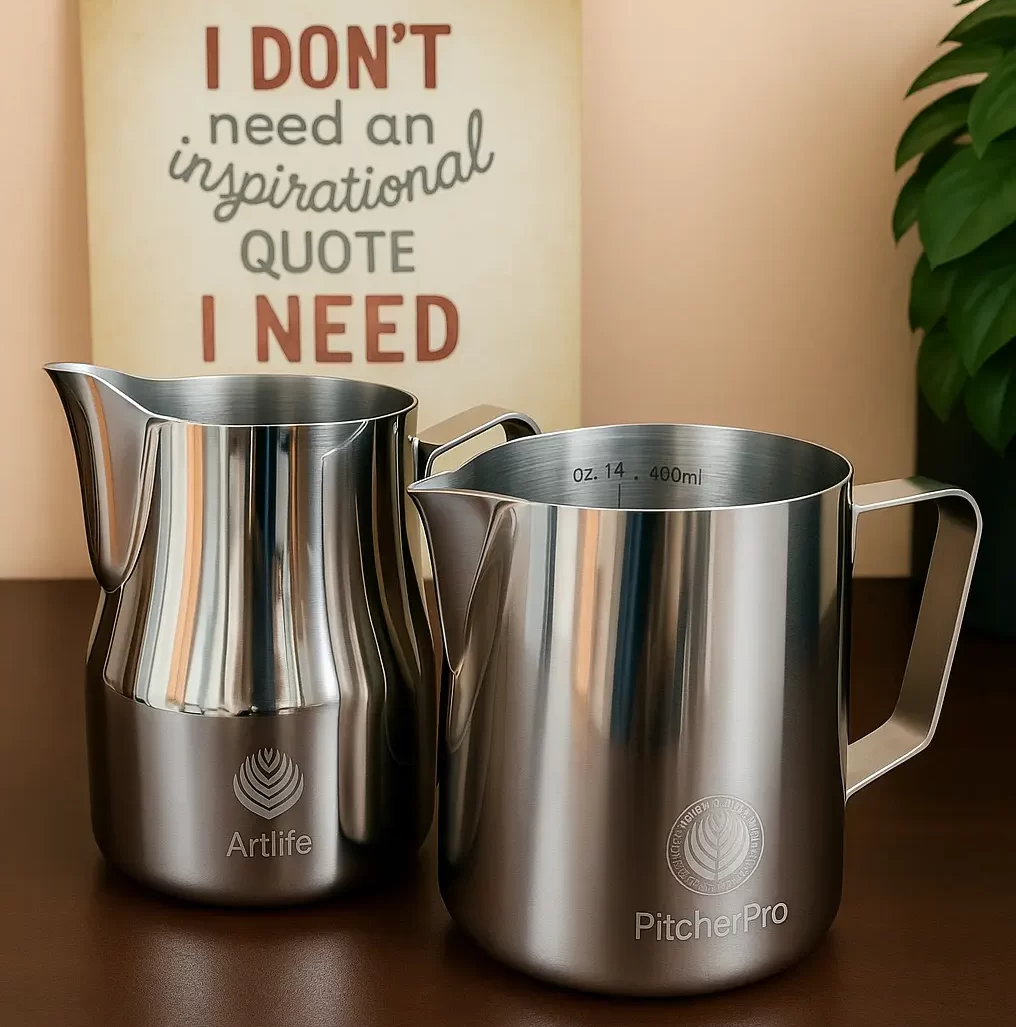
Every coffee enthusiast who dreams of pouring a perfect rosetta or a delicate heart into their morning latte knows that the journey begins long before the milk hits the espresso. It starts with the right tools, and few are as crucial as the humble Milk Frothing Pitchers. For both the aspiring home barista and the seasoned café professional, this simple-looking jug is the key to transforming milk into velvety microfoam—the silky, paint-like texture essential for beautiful and delicious drinks.
Having the right Milk Frothing Pitchers is essential for anyone who truly appreciates the art of coffee making.
Investing in quality Milk Frothing Pitchers will significantly improve your milk texture and pouring technique.
There are many types of Milk Frothing Pitchers available, each designed for specific purposes and styles.
When selecting Milk Frothing Pitchers, consider the spout design and material for best results.
Using high-quality Milk Frothing Pitchers can take your latte art to a professional level.
Properly designed Milk Frothing Pitchers not only aid in frothing but also enhance your pouring control.
The choice of Milk Frothing Pitchers can significantly affect the outcome of your latte art.
The right Milk Frothing Pitchers doesn’t just hold your milk; it influences its texture, temperature, and the very flow that creates your designs. Choosing the correct one can be the difference between a blob of foam and a masterpiece. This guide will walk you through everything you need to know, from understanding the core features to our top picks for 2025, ensuring you have the perfect partner for your coffee creations.
Different Milk Frothing Pitchers serve unique purposes, so choosing wisely is crucial.
With the right Milk Frothing Pitchers, you can achieve a perfect velvety texture for your drinks.
Learning how to use Milk Frothing Pitchers effectively will improve your skills tremendously.
Measurement markings on Milk Frothing Pitchers help with consistency in your drinks.
What are Milk Frothing Pitchers?
The right size of Milk Frothing Pitchers can make a significant difference in your frothing technique.
Smaller Milk Frothing Pitchers are ideal for practicing delicate designs.
Versatile Milk Frothing Pitchers can cater to various types of beverages.
A Milk Frothing Pitchers is a specially designed container used to steam milk with an espresso machine’s steam wand. Its primary role is to create a swirling vortex that evenly heats the milk while incorporating air, breaking down large bubbles into a smooth, uniform microfoam.
With the right techniques using Milk Frothing Pitchers, you can enhance your coffee experience.
Consider investing in specialized Milk Frothing Pitchers for your favorite coffee drinks.
Ultimately, the best Milk Frothing Pitchers will depend on your personal preferences.
Using quality Milk Frothing Pitchers is essential for achieving the perfect texture.
When you master the art of using Milk Frothing Pitchers, the possibilities are endless.
Each of these Milk Frothing Pitchers serves a unique purpose in your coffee routine.
Understanding how each of the Milk Frothing Pitchers works will make you a better barista.
Look for Milk Frothing Pitchers that offer a good balance of quality and price.
Many baristas prefer specific Milk Frothing Pitchers for their unique features.
Investing in multiple Milk Frothing Pitchers can enhance your coffee-making experience.
But it’s more than just a standard kitchen jug. A well-designed frothing pitcher is engineered for coffee. The shape, material, and spout are all optimized for frothing and pouring. Temperature control is one of the most critical aspects of steaming milk. The ideal temperature for milk froth is between 140-155°F (60-68°C). Any hotter, and the proteins in the milk begin to break down, losing sweetness and creating a less stable foam. A quality pitcher, typically made of stainless steel, allows you to gauge the temperature by touch, giving you a tactile sense of when to stop steaming.
For those serious about coffee, high-end Milk Frothing Pitchers are worth considering.
Additionally, proper maintenance of your Milk Frothing Pitchers is crucial for longevity.
Why the Pitcher Matters for Latte Art
In conclusion, selecting the perfect Milk Frothing Pitchers will enhance your coffee experience.
Many coffee lovers swear by their Milk Frothing Pitchers for achieving the ideal foam.
Ultimately, the right Milk Frothing Pitchers will resonate with your personal coffee style.
As you explore different Milk Frothing Pitchers, you’ll discover what works best for you.
Don’t hesitate to experiment with various Milk Frothing Pitchers for your perfect pour.
A common question from beginners is, does the pitcher affect latte art? The answer is a resounding yes. Your pitcher is as important as your canvas and paintbrush. Here’s why:
- Spout Shape: The spout is the single most important feature for latte art. A sharp, well-defined spout gives you the precision needed for intricate designs like rosettas and tulips. A wider, more rounded spout is better for simpler designs like hearts.
- Control and Handling: The weight, balance, and handle design of a pitcher determine how comfortable and controlled your pour is. A pitcher that feels like an extension of your hand allows for a steady, confident flow.
- Size: The size of the pitcher affects how the milk swirls and stretches. Using a pitcher that is too large for the amount of milk can make it difficult to create a proper vortex, while one that is too small can lead to overflow and poorly textured foam.
The material also plays a huge role. Stainless steel is the industry standard because it conducts heat effectively, allowing you to monitor the temperature by feeling the side of the jug. The smooth interior surface helps the milk roll smoothly, creating that perfect microfoam without unwanted friction. Furthermore, many modern pitchers include internal measurement scales, which help you reduce milk waste and achieve consistent results every single time.
Choosing the Right Size
“What size milk frothing pitcher should I get?” is one of the most frequent questions from new baristas. The right size depends on the drinks you make most often. As a rule of thumb, you should fill your pitcher to just below the start of the spout, which is usually about one-third to half full. This leaves enough room for the milk to expand and froth without overflowing.
Here are the common sizes and their best uses:
- 12oz (350ml): The perfect size for a single cappuccino or flat white. It’s the best milk pitcher size for latte art practice, as it minimizes milk waste and is easy to handle.
- 20oz (550-600ml): A versatile all-rounder. This size is ideal for making one large or two small lattes. It’s large enough to create a great vortex but small enough for precise control.
- 32oz (950ml): Best suited for a professional café environment or for home baristas who frequently make multiple drinks at once. It can be cumbersome for pouring detailed art but is excellent for texturing large quantities of milk.
For beginners, a 12oz or 20oz pitcher is the ideal starting point. Professionals often keep multiple sizes on hand to match the drink order.
Key Features to Look For
When shopping for the best milk pitchers for latte art, keep an eye out for these essential features.
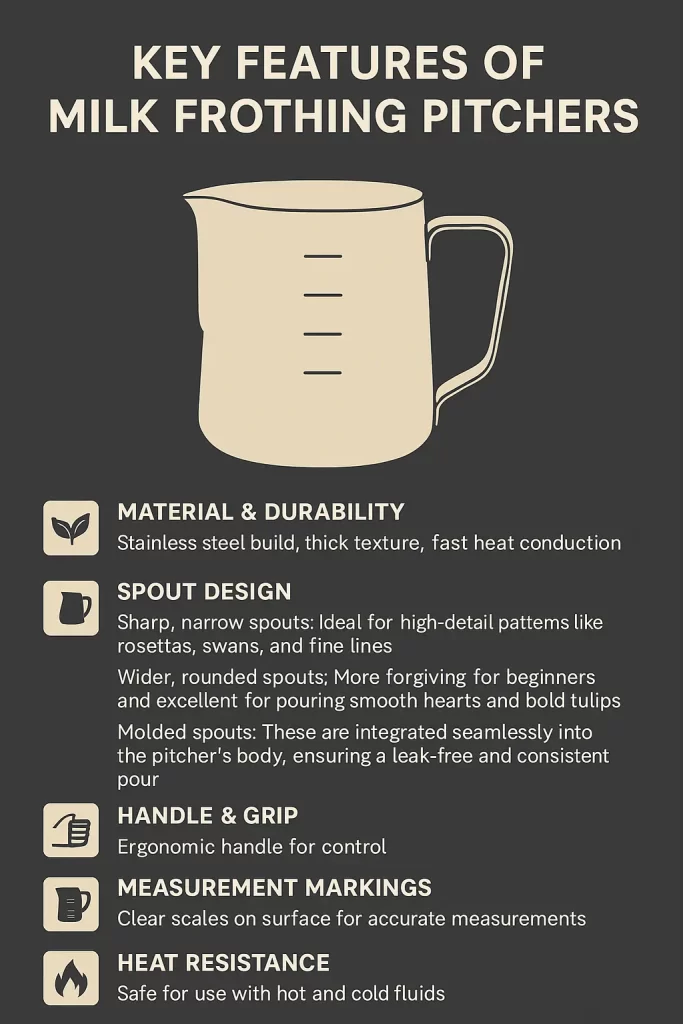
1. Material & Durability
Stainless steel is the undisputed champion. It is durable, non-porous, easy to clean, and an excellent conductor of heat. This conductivity is vital, as it lets you feel the milk’s temperature progression, ensuring you stop steaming at the perfect moment.
2. Spout Design
The spout is your creative tool.
- Sharp, Narrow Spouts: Ideal for high-detail patterns like rosettas, swans, and fine lines. They offer ultimate precision.
- Wider, Rounded Spouts: More forgiving for beginners and excellent for pouring smooth hearts and bold tulips.
- Molded Spouts: These are integrated seamlessly into the pitcher’s body, ensuring a leak-free and consistent pour.
3. Handle & Grip
A comfortable and ergonomic handle is crucial for a steady pour. An extended handle provides more distance from the hot pitcher, preventing burns and offering a different leverage point. Test how a pitcher feels in your hand; it should feel balanced and natural.
4. Measurement Markings
Internal measurement markings are a game-changer for consistency. Clear scales etched on the inside surface help you pour the exact amount of milk needed for each drink, reducing waste and ensuring your milk-to-espresso ratio is always spot-on.
5. Heat Resistance
Your pitcher must be able to handle rapid temperature changes. A quality stainless steel jug is safe for both hot steamed milk and cold fluids. This durability also means it can be easily sterilized, a must in a professional setting.
6. Can you put a milk frothing pitcher on the stove?
This is a critical safety question. The answer is no. Milk frothing pitchers are made from thin stainless steel designed for use with a steam wand. Placing them directly on a gas or electric stove can damage the pitcher, scorch the milk, and create a serious burn hazard. Stick to using your espresso machine’s steam wand or a separate stovetop-safe pot for heating milk.
Do You Need Two Pitchers for Latte Art?
You’ll often see professional baristas working with two pitchers. One, typically larger, is used for steaming the milk. They then transfer a portion of the frothed milk into a smaller, specialized latte art frothing pitcher for the pour. This technique, known as “splitting,” helps integrate the foam and milk perfectly and provides better control for intricate designs.
For home use, a single pitcher is usually enough to get started. However, as you advance, you might find that using a second, smaller pitcher for pouring elevates your art to the next level.
Featured Products (2025 Picks)
After extensive testing and review, we’ve compiled our list of the best milk frothing pitchers for 2025.
Milk Frothing Pitcher
This classic design is a fantastic entry point for any home barista. Its focus is on function and reliability.
- Build: Made from thick, food-grade stainless steel, its sturdy texture ensures fast and even heat conduction, giving you real-time temperature feedback.
- Design: The professional frothing pitcher opening and simple, elegant shape make it perfect for learning the fundamentals of milk frothing. Clear scales on the inner wall take the guesswork out of measuring.
- Usability: It’s incredibly easy to clean and sterilize, making it a low-maintenance tool for daily use. The handle is comfortable and provides a secure grip.
This pitcher is perfect for those who want to master the basics of frothing before diving into complex art.
Latte Art Jug 550ml
When precision becomes your priority, this jug is designed to deliver. It’s built specifically for the art of the pour.
- Spout & Handle: The perfectly molded, sharp spout ensures you have a dripless, consistent stream for detailed latte art. Its sturdy and extended handle keeps your hand safe from the hot metal and offers superior control during pouring.
- Material: Constructed from high-quality, polished stainless steel, it not only looks contemporary but is also strong and built to last.
- Versatility: At 550ml (around 20oz), this jug hits the sweet spot for versatility. It works perfectly with any espresso machine that has a milk frother and is suitable for preparing hot chocolate or other coffee drinks.
Best Picks Roundup
- Best for Beginners – Amrules Frothing Pitcher (12oz):
- With its clear measurement scale and forgiving spout, this is a fantastic learning tool. It helps you build muscle memory for frothing and pouring without wasting too much milk. The smooth mouth is specially designed to facilitate milk pools together to ensure a steady flow of milk froth.The Amrules milk frother pitcher comes with a 304 stainless steel latte art pen,
- Best for Latte Art Precision – 550ml Latte Art Jug:
- Its sharp spout and ergonomic handle make this the best latte art milk pitcher for baristas ready to tackle complex designs.
- Budget Pick – Dailyart 250ml (8.5oz) Pitcher:
- An affordable, smaller-sized option perfect for single-cup practice. Its dripless spout is surprisingly effective for its price point.
- Professional Choice – Normcore Handleless Milk Pitcher:
- The Normcore handleless frother pitcher has a unique handleless design to improve control and precision. The accurate spout is wide enough to accommodate a steam wand, and a small portion of exposed metal at the bottom of this milk froth cup allows for easy touch and testing of the milk’s temperature.
How to Use a Frothing Pitcher Correctly
Owning the right pitcher is only half the battle. Here’s a quick guide to getting that perfect microfoam.
- Fill It Up: Pour cold milk into your pitcher, filling it to just below the spout’s base.
- Purge the Wand: Before inserting the steam wand, turn it on for a second to clear out any condensed water.
- Aerate (Stretching): Submerge the tip of the steam wand just below the surface of the milk. Turn the steam on. You should hear a gentle “tearing” or “kissing” sound. This incorporates air. Let the milk expand by about 30%.
- Incorporate (The Vortex): Plunge the wand deeper into the milk, positioning it off-center to create a swirling vortex. This breaks down large bubbles and textures the milk into a silky microfoam. Continue until the side of the pitcher is too hot to comfortably hold.
- Groom the Milk: Turn off the steam and remove the wand. Wipe the wand immediately. Tap the pitcher on the counter to pop any large bubbles and swirl the milk to keep it integrated and glossy.
For pouring, start high to let the milk sink below the crema, then lower the pitcher to let the white foam rest on top, creating your design. Practice pouring simple hearts before moving on to tulips and rosettas.
FAQs
What size milk pitcher for latte art?
A 12oz (350ml) pitcher is best for single drinks and practice, while a 20oz (550ml) pitcher is a great all-around size for lattes.
Does pitcher affect latte art?
Absolutely. The spout shape dictates your pouring precision, while the pitcher’s size and shape influence the quality of your microfoam.
Can you put a milk frothing pitcher on the stove?
No. It is unsafe and can damage the pitcher and scorch the milk. Only use it with an espresso machine’s steam wand.
What’s the best latte art milk pitcher?
For precision, a pitcher with a sharp, narrow spout is best. For beginners, one with a more rounded spout and measurement marks is ideal.
Best milk pitchers for latte art on Amazon?
Brands like Amrules, Dailyart, and Adorever offer excellent, highly-rated options for all skill levels and budgets.
Conclusion
Choosing the right milk frothing pitcher is a small investment that pays huge dividends in the quality of your coffee drinks. It’s an essential tool that empowers you to create cafe-quality microfoam and beautiful latte art right in your own home. By understanding the key features—like spout design, material, and size—you can select a pitcher that will grow with you on your barista journey.
Whether you’re a beginner looking for a reliable tool to learn with or a pro seeking precision, there is a perfect pitcher out there for you.
Ready to elevate your coffee game? Check out Amazon’s best-rated milk frothing pitchers today and start pouring your own